Tuesday, 17 March 2015

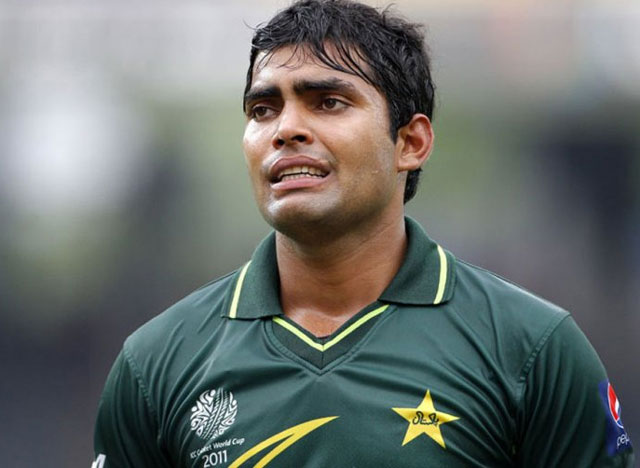
Umer Gull

Umer Gull Biography

Gul was born in Peshawar of Khyber-Pakhtunkhwa province of Pakistan he was born in a middle-class family and frequently played tape-ball cricket. People on the street encouraged Gul to become an international cricketer as they saw his excellent bowling. On October 2010 Gul's family announced that he was to wed a Dubai Doctor. The doctor is from the Khyber-Pakhtunkhwa province and was born there as well.[8][9][10] Gul's first daughter, Rehab Umar, was born in May 2012.[11] In the same month, Pakistan Army Commandos mistakenly raided Umar Gul's house in Peshawar and arrested his brother Meeraj Gul on the charge of hiding a wanted militant. However, the commandos later on apologized to Meeraj.[12]


Career


Early career


Gul was first called up for the team in April 2003, playing four one-day matches at the Cherry Blossom Sharjah Cup againstZimbabwe, Kenya and Sri Lanka,[13] where he took four wickets, and he was in and out of the one-day team after that tournament. However, he played the whole of the 2003–04 home series against Bangladesh, making his Test debut and taking 15 wickets in the three Tests, and took the second-most wickets of any Pakistani bowler in the series, behind Shabbir Ahmed with 17. However, Shoaib Akhtar, who took 13 in third place, only played two of the Tests.


Gul was retained for the ODIs against Bangladesh, taking a List A best five for 17 in nine overs in the third match, and ended with 11 wickets in the 5–0 series win. However, he could still not command a regular spot, playing three of Pakistan's nine next ODIs before finally getting dropped after one for 36 against New Zealand.


Test matches


He was recalled and played two Tests after that taking four wickets in a drawn Test against New Zealand before coming in as replacement for Shabbir Ahmed in the second Test of the three-Test series against India. After coming on as first-change bowler, Gul dismissed Virender Sehwag in his second over, and then bowled unchanged for 12 overs either side of lunch to take five Indian top order wickets – including Rahul Dravid and Sachin Tendulkar, who both had Test batting averages above 50, as did Sehwag. Gul finished with five for 31 in his spell, earning him commendation from Cricinfo journalist Dileep Premachandran, who praised his "control of line and length",[14] and he was also named Man of the Match despite conceding runs at five an over in the second innings in a nine-wicket win.


After a length injury lay-off, which kept him out of international cricket for nearly two years, Gul returned to the Pakistan fold in 2006. Firstly with quiet away series against Sri Lanka then followed by a tour to England in 2006. Gul was quickly made the lead bowler in the side due to the injuries to other front line bowlers. Gul to 18 wickets in four tests, justifying the selectors faith in him.


Later in 2006, against West Indies at home, Gul had perhaps his most successful test series. He took 16 wickets in 3 tests, including notable spells of reverse swing bowling. He was responsible for breaking Ramnaresh Sarwan's toe with a dipping yorker.


Test appearances however remained few and far between due to injuries and lack of test cricket for Pakistan.


In February 2009, Gul recorded his best test figures in the Pakistan team, taking 6 for 135 on a flat pitch.


In July 2010, Pakistan faced England at Trent Bridge and were 147/9 in their first innings. Gul scored 30* before the day was called off due to bad light. He returned the next day with Mohammad Asif and batted with intent to add another 35 runs in five overs. This saw Pakistan avoid the follow-on against England and therefore survive an innings defeat.[15]


Gul then suffered a hamstring injury in the second test when he was touring England in 2010 he was ruled out for three weeks that meant he would miss the remaining two tests. However Gul managed to recover and became fit enough to play in the fourth test[16] However they decided to rest Gul for the final test match despite the fact that he had recovered quicker than expected.


His next chance to play test cricket came against South Africa in November 2010 when he took 3 wickets in a first innings and triggered a South African collapse of 380 on a flat wicket. He took the crucial wicket with an excellent inswinger againstAB de Villiers[17]


Twenty20


With injuries limiting Gul's test cricket participation, he made a distinct change to his bowling set-up, making a focus on bowling in the late overs of T20. He got his opportunity with the absence of Shoaib Akhtar and Abdul Razzaq in the 2007 ICC World Twenty20 held in South Africa. He bowled from the 13th over onwards and finished the tournament with 13 wickets, becoming the leading wicket taker ahead of Shahid Afridi and RP Singh.


In the 2009 ICC World Twenty20, he performed well, earning the mantle from at least one pundit of "the outstanding seam bowler of the World Twenty20".[18] His five-wicket haul for just six runs, when Pakistan defeated New Zealand, won especial acclaim. The spell made him the first bowler in history to take a five wickets in a Twenty20 international, and he held the record of best T20 bowling figure until 8 August 2011, when surpassed by Ajantha Mendis (6/16).[19] Mutterings were made about a possible correlation between ball tampering and the exorbitant amounts of reverse-swing he was able to extract, but he denied them categorically: "whenever an Asian bowler performs and uses the reverse-swing, the Western cricketing countries raise the issue of ball-tampering against them."[20]


He was also part of the Pakistan team that lifted the trophy at Lord's while also finishing as the leading wicket taker of the tournament for the second consecutive time.[21]


He gained a lot of wickets bowled, in particular with late reverse swinging yorkers, which dip late to slide under the bat and leave little room for batsmen to maneuver the ball. Consequently he has also an excellent economy rate in this format of the game.


In February 2008, Gul signed with the Indian Premier League and was drafted by Shahrukh Khan's Kolkata Knight Ridersfranchise for US $150,000.[22] He played in six matches, taking 12 wickets at an average of 15.33,[23] including a player of the match award in Kolkata's final game in which Gul took 4–23 and scored 24 runs from 11 balls.[24]


In December 2008, Gul signed with the Western Warriors to compete in the Australian domestic 2008-09 KFC Twenty20 Big Bash tournament.[25] He performed very well in his debut match for the Warriors, taking 4 wickets for 15 runs in a losing side. He was among the most successful bowlers in the competition. Despite not being available for the entire tournament, he finished second top wicket-taker with 12 wickets.[26]


Internationally, Gul has taken 47 wickets in 32 games at an average of 14.65. He is the second leading wicket-taker inTwenty20 Internationals behind teammate Shahid Afridi.


One Day Internationals


Gul appeared in all three of Pakistan's group matches in the 2007 World Cup taking four wickets with an economy rate of 3.13, only Shane Bond of those to deliver 100 balls was more economical.[27] He also appeared in all of Pakistan's matches at the 2007 ICC World Twenty20 taking 3/15 of 4 overs in the semi-final victory over New Zealand. He took three wickets in the final to finish as the tournament's leading wicket-taker.[28]


In July 2014, he played for the MCC side in the Bicentenary Celebration match at Lord's.[29]


Batting-skills


Despite being a bowler Gul can perform well as a lower order batsman and has proved his ability as a quick.run-picker His finest moment with the bat came in a test match against England in August 2010 when Pakistan were at 103/7 and Gul came into bat at 8. He scored 29 off 30 deliveries, and when play ended that day, two more wickets had fallen and the team were at 148/9. Pakistan needed 11 more runs to avoid the follow-on, and Gul then came in with his number 10 partner Mohammad Asif. Gul scored 34 runs in just 11 deliveries however his partner Mohammad Asif was run out at the other end and Gul ended on 65 not out.


Injuries


However, Gul was then ruled out of the third Test with a back injury which kept him out of cricket for an entire year. He returned to play two games at the 2004–05 Faysal Bank T20 Cup, and played some matches for Pakistan A and a Pakistan XI in warm-up games before the Test matches against England the following season, but he was not selected for the matches and has instead played three matches with Peshawar at the Quaid-e-Azam Trophy.


Gul had signed a one year contract with Gloucestershire to play in 2007, but the Pakistan Cricket Board failed to give them their permission.[30]


Shortly after making a six-month come-back from a shoulder injury in July 2010 Gul picked up a hamstring injury against England in August but it wasn't too serious and he only missed the two Test matches.


Umer Gull

Umer Gull


Umer Gull
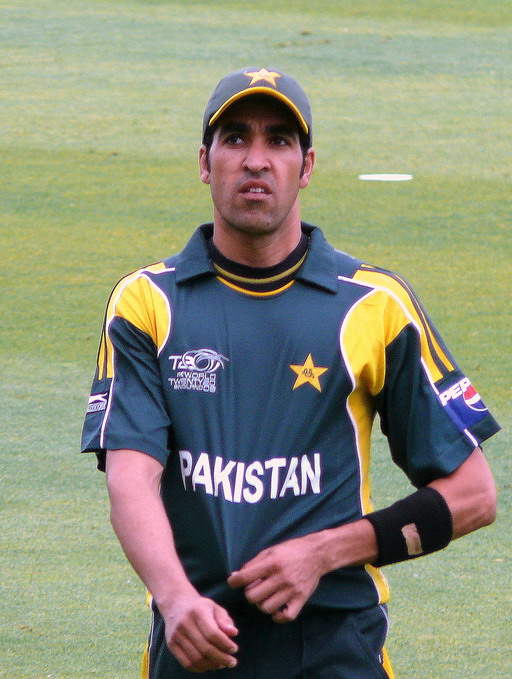

Umer Gull


Umer Gull
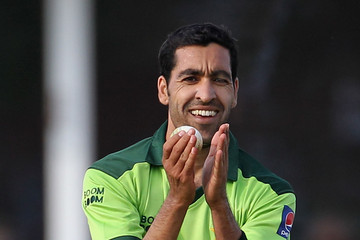

Umer Gull


Umer Gull


Umer Gull


Umer Gull


Umer Gull

Umer Gull


kamran Akmal

Kamran Akmal Biography


Kamran Akmal (born 13 January 1982 in Lahore) is a Pakistani cricketer who has played 38 Test matches and 88 ODIs for Pakistan. He is a quick-scoring batsman and a wicket-keeper, who has achieved four centuries and two fifties in 31 Test innings. However, his first century was vital - his 109 from the number eight position at Mohali, coming in with Pakistan in a lead of 39 against India in the first Test, ensured that the visitors could draw the match. His form against the touring English in 2005 made him one of the most important players in the team. Naturally, he is a batsman that plays lower down the order but has sometimes opened in both Test and One-day cricket. As an opener he has scored two back to back centuries in ODIs against England. Coming in lower down the order in Test matches, he played one memorable innings. He saved Pakistan from a score of 39/6, scoring a century, to a competitive 245 which helped Pakistan win the match and series. His batting was highly productive in early 2006 as he scored seven international hundreds within the space of 6 months. Since his tour of England in Summer 2006 however his batting form dwindled and steadily become worse. His wicket-keeping also worsened and dropped many catches on both the England tour and on a tour to South Africa in early 2007. Since then he did not score an international hundred until the Bangladeshi tour of Pakistan in 2008. Kamran Akmal was dropped for the Asia Cup 2008 as a result of his poor batting form and very poor keeping. He was replaced by Sarfraz Ahmed who has performed very well the domestic level. Kamran was named in the 30 man probable squad for the 2008 ICC Champions Trophy. On 12 November 2008, Akmal hit two consecutive 6s in the last over. As a result Pakistan won the first ODI in Abu Dhabi against West Indies. Akmal was also signed on to the Rajasthan Royals, and played in the inaugural season of the IPL. He played five matches in the tournament, as wicket-keeper and top-order batsman, including the final of the tournament against the Chennai Super Kings. He took two catches in the first innings, however he was run out for six runs during the Royal's chase. The Royals went on to win the tournament after a thrilling finish.

Current age 29 years 6 days


Batting style Right-hand bat


Fielding position Wicketkeeper


Relation Brother - Adnan Akmal, Brother - Umar Akmal 

Kamran Akmal may well be the most emphatic proof of cricket's changed priorities post Adam Gilchrist. Sides now search for an explosive batsman who can change a day, an innings, a phase with the bat and so long as you can identify right wicketkeeping glove from left, the place is yours.

Kamran Akmal might fighting fit be the majority vigorous testimony of cricket’s distorted main concerned position Adam Gilchrist. A side at the present rummage around for a volatile batsman who can revolutionize a day, an innings, and a stage by means of the bat and so elongated while you can recognize right wicket keeping glove from left, the position is yours.

There has been diminutive distrust concerning Akmal’s batting. The cleanliness of his constrains and the potency of his wounding and dragging, for the most part on slower subcontinent exteriors, has all the time apprehended a strong magnetism. And when it comes mutually as it did one January morning in Karachi in opposition to India – one of the Test innings of that decade – he makes it in the side as a batsman unaccompanied.

Other than his glove work, which started quit auspiciously at what time he successfully finished the battle between Rashid Latif and Moin Khan in belatedly 2004, has got worse frighteningly and a small number of Pakistan matches are complete exclusive of a lumbering Akmal mistake.

It was not for all time hence, for that he was excellent at what time he started, quit presentable to make an impression Ian Healy. On the other hand uncontrollably cricket in all three systems have consent to methodological blunders move stealthily in and critics and specialists have extended pushed for the need for him to take a break.

Kamran Akmal may well be the most emphatic proof of cricket's changed priorities post Adam Gilchrist. Sides now search for an explosive batsman who can change a day, an innings, a phase with the bat and so long as you can identify right wicketkeeping glove from left, the place is yours.There has been little doubt about Akmal's batting. The purity of his drives and the strength of his cutting and pulling, particularly on slower subcontinent surfaces, has always held a strong allure. And when it comes together as it did one January morning in Karachi against India - one of the Test innings of that decade - he makes it in the side as a batsman alone.


But his glovework, which began so promisingly when he effectively ended the dogfight between Rashid Latif and Moin Khan in late 2004, has deteriorated alarmingly and few Pakistan matches are complete without a clumsy Akmal error. It wasn't always thus, for he was good when he began, good enough to impress Ian Healy. But non-stop cricket in all three formats have let technical errors creep in and critics and experts have long pushed for the need for him to take a break.To quality spin, he is often as lost as the batsmen and Danish Kaneria, over the years, has suffered in particular. In a string of error-ridden performances, the one nobody will forget will be the four dropped catches (and a missed run-out) in the Sydney Test of 2009-10, which allowed Australia to escape with a remarkable, traumatic win. Against this the memory of his Karachi hundred will always battle, with no clear winner ever likely to emerge. The tryst with controversy does his cause no good, with his refusal to accept his demotion from the side in the aftermath of a disastrous Sydney Test in 2009, eliciting a harsh fine and a disciplinary probation from the PCB.


Kamran Akmal

Kamran Akmal

Kamran Akmal

Kamran Akmal

Kamran Akmal

Kamran Akmal

Kamran Akmal

Kamran Akmal

Kamran Akmal

Kamran Akmal

Kamran Akmal

Abdul Razzaq

Abdul Razzaq Biography

Abdul Razzaq was once rapid enough to open the bowling and remains composed enough to bat anywhere, though he is discovering that the lower-order suits him nicely. His bowling - the reason he was first noticed - is characterised by a galloping approach, accuracy, and reverse-swing. But it is his batting that is more likely to win matches. He boasts a prodigious array of strokes and is particularly strong driving through cover and mid-off off both front and back foot. He has two gears: block or blast. Cut off the big shots and Razzaq gets bogged down, although patience is his virtue as he demonstrated in a match-saving fifty against India in Mohali in 2005. Just prior to that he had also played a bewilderingly slow innings in Australia, scoring four runs in over two hours. When the occasion demands it though, as ODIs often do, he can still slog with the best of them: England were pillaged for a 22-ball 51 at the end of 2005. and then again for nearly 60 runs in the last three overs of an ODI in September the following year.

It has hardly been smooth sailing though through his career. He suffered a slump, particularly in his bowling, between 2002 and 2004 when, though his place in the team wasn't under threat, there was uncertainty over how best to use him. But there were signs he was rediscovering some of his old guile if not his pace and nip. And if the pitch is in anyway helpful to seam - as it was in his first and only Test five-wicket haul at Karachi in 2004 or against India at the same venue in January 2006 - he can be a proper danger. Though Kamran Akmal's hundred overshadowed all in the Karachi win over India, Razzaq's performance was easily his most emphatic as an allrounder: he scored 45 and 90 as well as taking seven wickets in the match. A combination of injuries and poor form put his Test place into question and a knee injury days before the 2007 World Cup meant Pakistan missed his presence in a disastrous campaign.

A lackluster comeback to international cricket against Sri Lanka in Abu Dhabi and mediocre performance in the practice matches saw Razzaq being omitted from the 15-man squad for the Twenty20 World Championship and consequently announce his retirement from international cricket. He then went on to sign for Worcestershire towards the end of the county season as well as signing up with the Indian Cricket League, which ruled him out of Pakistan contention. He took back his decision to retire but committed himself to the ICL for two seasons, during which he served the Hyderabad Heroes as one of their star players.

After a global amnesty and quitting the ICL, he was welcomed back to the Pakistan fold for the World Twenty20 in England and made an immediate impact as Pakistan won the tournament. His Test comeback also looked set to be complete after he was included in Pakistan's 15-man squad for the tour of Sri Lanka in June. Early in his career he promised to be Pakistan's most complete allrounder since Imran Khan, and though for a variety of reasons he hasn't translated that into achievement, his country wouldn't mind having just a very solid allrounder


Razzaq struggled with the bat in the first two Twenty20's against New Zealand but he did perform admirably with the ball taking out Jesse Ryder for a golden duck in the second Twenty20. During the third match Razzaq blased 34 of just 11 balls in an innings that included 3 fours and 3 sixes. This innings helped Pakistan push their total onto 184. Razzaq then did the damage with the ball taking the leading run scorer of the series Martin Guptill out for a duck and then took two more top order wickets of Ross Taylor (Leg-before) and clean bowled James Franklin. For this superb all round perform coupled with a 103 run victory for Pakistan Razzaq won man of the match. However two early losses in the series meant New Zealand won the series 2–1


.


.
Abdul Razzaq


Abdul Razzaq


Abdul Razzaq


Abdul Razzaq

Abdul Razzaq

Abdul Razzaq


Abdul Razzaq


Abdul Razzaq

Umar Akmal


Umar Akmal Biography


Full name Umar Akmal Born May 26, 1990, Lahore, Punjab Current age 20 years 238 days Batting style Right-hand bat Fielding position Occasional wicketkeeper Relation Brother – Kamran Akmal, Brother – Adnan Akmal Umar Akmal Picture Major teams Pakistan, Lahore...

Umar Akmal (born 26 May 1990 in Lahore) is a Pakistani cricketer. He made his ODI debut on August 1, 2009 against Sri Lanka.

Current age 20 years 238 days


Batting style Right-hand bat


Fielding position Occasional wicketkeeper


Relation Brother - Kamran Akmal, Brother - Adnan Akmal

Playing Roll: Batsman

Batting Style: Right


Umar Akmal Profile


The runs didn't cease to flow for Umar Akmal, the younger brother of Pakistan wicketkeeper Kamran and Adnan, in his maiden first-class season. In a triumphant 2007-08 for Sui Northern Gas Pipelines Limited, Umar failed to score in his first outing but then went on to amass 855 runs from nine matches in the Quaid-e-Azam Trophy, at an average of 77.72 and an impressive strike-rate of 90.18. He showed a penchant for both brisk and big scoring, with knocks of 248 off 225 balls and 186 off 170. In January 2008, he was picked in Pakistan's Under-19 team for the World Cup in Malaysia. He was the leading run-getter - with 255 runs at a strike-rate of 123.18 - in a tri-nation tournament involving England and Sri Lanka in the lead-up to the World Cup. A successful tour of Australia with Pakistan A was followed up a maiden international call-up for the ODIs in Sri Lanka, and Umar started off with a half-century in his second game and a power-packed hundred in his third. A Test call-up was inevitable and he gave an optimistic glimpse into the future of Pakistan cricket, with a century on debut, under pressure followed by a string of consistent scores in New Zealand.

As explosive starts to one’s International careers go, few can rival Umar Akmal. He announced his entry with scores of 66 and 102* within his first 3 ODI innings (at Sri Lanka, 2009) in addition to a 129 and 75 on Test debut (at New Zealand, 2009). Those performances weren’t a surprise. At first class level, Akmal was renowned for his big scores amassed in quick time. 7 years prior to his debut, Umar’s elder brother Kamran had already gotten his taste of international cricket. By 2010, the siblings featured regularly, in tandem for Pakistan.

As a fearless, middle-order batsman, throughout Pakistan’s disappointing spree of series losses against Sri Lanka in 2009 and later at Australia in early 2010, Umar Akmal’s ascendance was one of their few positives. But as the series in Australia progressed, complacency began to creep into Akmal’s Test form, which started to dip. In ODIs though, a hundred and five fifties by his 18th outing maintained a steady average. It was enough to justify an inclusion in Pakistan’s 2010 T20 World Cup squad. He finished the tournament as Pakistan’s 3rd highest-run getter towards their semi-final run.

While still protected as a batsman, featuring at 3-down, in a Pakistan side that lacks specialist batsmen with the temperament for all forms of the game, Umar Akmal is their most proven rookie to fill the void for the years to come.

The runs didn't cease to flow for Umar Akmal, the younger brother of Pakistan wicketkeeper Kamran and Adnan, in his maiden first-class season. In a triumphant 2007-08 for Sui Northern Gas Pipelines Limited, Umar failed to score in his first outing but then went on to amass 855 runs from nine matches in the Quaid-e-Azam Trophy, at an average of 77.72 and an impressive strike-rate of 90.18. He showed a penchant for both brisk and big scoring, with knocks of 248 off 225 balls and 186 off 170. In January 2008, he was picked in Pakistan's Under-19 team for the World Cup in Malaysia. He was the leading run-getter - with 255 runs at a strike-rate of 123.18 - in a tri-nation tournament involving England and Sri Lanka in the lead-up to the World Cup. A successful tour of Australia with Pakistan A was followed up a maiden international call-up for the ODIs in Sri Lanka, and Umar started off with a half-century in his second game and a power-packed hundred in his third. A Test call-up was inevitable and he gave an optimistic glimpse into the future of Pakistan cricket, with a century on debut, under pressure followed by a string of consistent scores in New Zealand.

Umar Akmal

Umar Akmal
Umar Akmal
Umar Akmal
Umar Akmal
Umar Akmal
Umar Akmal
Umar Akmal
Umar Akmal

Umar Akmal
Umar Akmal

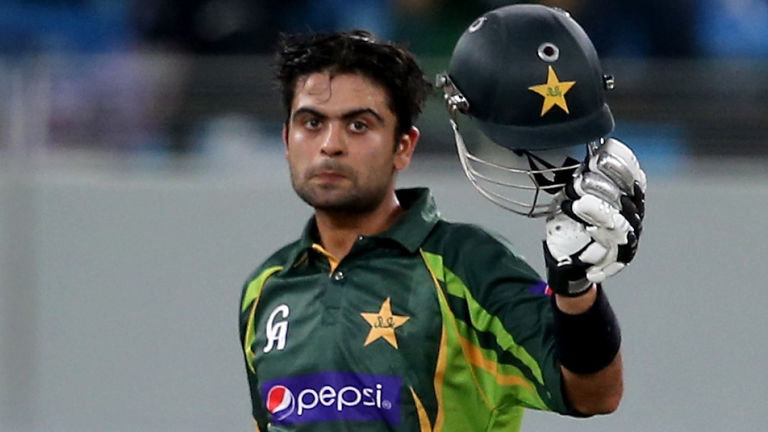
Ahmed Shehzad

Ahmed Shehzad Biography

Full name Ahmed Shahzad
Born November 23, 1991, Lahore

 Ahmed Shehzad aims to be an aggressive batsman like Ricky Ponting, and he is well on his way if his top-order performances for Pakistan Under-19s are any indication. Shehzad made his first-class debut in January 2007, just two months after his 15th birthday, and has since established himself as an opening batsman for the U-19 team. His 167 in the same year helped Pakistan chase down a stiff 342 in the first Youth Test against England in Derby. He backed that up with impressive performances at home, scoring 315 runs - with a highest of 105 - as Australia Under-19s were thrashed 5-0. Another century followed in the Youth Test against Bangladesh, and he carried that form into the triangular tournament in Sri Lanka in 2008, which Pakistan won. He made it to the Pakistan Test squad for the home series against Sri Lanka the following year despite not being in the probables. A century in the tour game against the visitors changed his fortunes. He returned to the Under-19 circuit to represent Pakistan in the World Cup in New Zealand.

Ahmed Shehzad (born 23 November 1991 in Lahore) is a Pakistani cricketer. He plays domestic cricket for Habib Bank Limited. He made his one-day international debut for Pakistan on 24 April 2009 against Australia.


Ahmed Shehzad aims to be an aggressive batsman like Ricky Ponting, and he is well on his way if his top-order performances for Pakistan Under-19s are any indication. Shehzad made his first-class debut in January 2007, just two months after his 15th birthday, and has since established himself as an opening batsman for the U-19 team.


His 167 in the same year helped Pakistan chase down a stiff 342 in the first Youth Test against England in Derby. He backed that up with impressive performances at home, scoring 315 runs - with a highest of 105 - as Australia Under-19s were thrashed 5-0.


Another century followed in the Youth Test against Bangladesh, and he carried that form into the triangular tournament in Sri Lanka in 2008, which Pakistan won. He made it to the Pakistan Test squad for the home series against Sri Lanka the following year despite not being in the probables.


A century in the tour game against the visitors changed his fortunes. He returned to the Under-19 circuit to represent Pakistan in the World Cup in New Zealand.

Ahmed Shehzad aims to be an aggressive batsman like Ricky Ponting, and he is well on his way if his top-order performances for Pakistan Under-19s are any indication. Shehzad made his first-class debut in January 2007, just two months after his 15th birthday, and has since established himself as an opening batsman for the U-19 team. His 167 in the same year helped Pakistan chase down a stiff 342 in the first Youth Test against England in Derby. He backed that up with impressive performances at home, scoring 315 runs - with a highest of 105 - as Australia Under-19s were thrashed 5-0. Another century followed in the Youth Test against Bangladesh, and he carried that form into the triangular tournament in Sri Lanka in 2008, which Pakistan won. He made it to the Pakistan Test squad for the home series against Sri Lanka the following year despite not being in the probables. A century in the tour game against the visitors changed his fortunes. He returned to the Under-19 circuit to represent Pakistan in the World Cup in New Zealand.


hehzad


Ahmad Shehzad


Ahmad Shehzad


Ahmad Shehzad


Ahmed Shehzad


Ahmed Shehzad


Ahmad Shehzad


Ahmad Shehzad


Ahmad Shehzad


Ahmad Shehzad

Mohammad Yousuf

Mohammad Yousuf Biography


Mohammad Yousuf (formerly Yousuf Youhana, born 27 August 1974, Lahore, Punjab, Pakistan) is a Pakistani cricketer who has been a member of the Pakistani national cricket team since 1998. He is best known for his achievement in 2006 when he broke the great West Indian batsman, Sir Vivian Richards', world record for the most Test runs in a single calendar year. Prior to his conversion to Islam in 2005, Yousuf was one of the few Christians to play in the Pakistan national cricket team. He made his Test debut against South Africa at Durban and ODI debut against Zimbabwe at Harare. He has scored over 9,000 ODI runs at an average of 43.63 (2rd highest batting average among Pakistani batsmen after Zaheer Abbas and 6,770 Test runs at an average of 55.49 (highest batting average amongst all Pakistani batsmen) with 23 Test centuries. He has the record of scoring the most runs without being dismissed in ODIs, 405 against Zimbabwe in Zimbabwe in 2002-03. He has also scored a 23-ball fifty in ODIs, and a 68-ball hundred. In Tests he has scored a 27-ball fifty, which is 3rd fastest by any player. He was top scorer during the successive years of 2002 and 2003 in the world in ODIs. In 2004, he scored a memorable 111 against the Australians in the Boxing Day Test. In December 2005, he scored 223 against England at Lahore, also earning him the man of the match award. Seven months later in July 2006, when Pakistan toured England, he scored 202 and 48 in the first Test, again earning himself the man of the match award. He followed up with 192 in the third Test at Headingley and 128 in the final Test at the Oval. Yousuf was named CNN-IBN.s Cricketer of the Year for 2006, ahead of the likes of Australian captain Ricky Ponting, West Indies Brian Lara, Australian spinner Shane Warne, South Africa.s bowling spearhead Makhaya Ntini and Sri Lanka.s Muttiah Muralitharan. He was selected as a Wisden Cricketer of the Year in the 2007 edition. Yousuf became the fourth recipient of the ICC 'Test Cricketer of the Year' award for 2007, he scored 944 runs at an average of 94.40 including five centuries and two fifties in just 10 innings and that was enough to be awarded the honour ahead of Kevin Pietersen and Ricky Ponting. Yousuf was also named in the 2007 Test team of the Year alongside compatriot Mohammad Asif. A year that started on a promising note, Yousuf carried it forward to break two world records both held earlier by West Indian great Sir Vivian Richards. The 32-year-old smashed an unparalleled 1788 runs in just 11 Test matches with the help of nine centuries . his second record . taking him beyond the Windies great yet again. Yousuf is known for his ability to score runs at exceptional rate through his great technique and composed strokeplay. Although capable of hitting the ball hard, Yousuf is quick between the wickets, although he is prone to being run out. Yousuf is a skillful infielder, with a report prepared in late 2005 showing that since the 1999 Cricket World Cup, he had effected the ninth highest number of run-outs in ODI cricket of any fieldsman. He is also distinguished by his characteristic celebration after hitting one hundred runs for his country, where he prostrates in thankfulness to Allah in the direction of Mecca. He has observed this act (known as the Sajdah) recently since his conversion to Islam.

Major teams Pakistan, Asia XI, Bahawalpur, Lahore, Lahore Badshahs, Lancashire, Pakistan International Airlines, Warwickshire, Water and Power Development Authority, Zarai Taraqiati Bank Limited


Batting style Right-hand bat


Bowling style Right-arm offbreak

Mohammad Yousuf Profile 


Until his conversion to Islam in 2005, Mohammad Yousuf (formely known as Yousuf Youhana) was one of a handful of Christians to play for Pakistan. After a difficult debut against South Africa in 1997-98, he quickly established himself as a stylish world-class batsman, and a pillar of Pakistan's middle order, alongside Inzamam-ul-Haq. He is no sluggard, but gathers his runs through orthodox, composed strokeplay, unlike some of his colleagues who seldom hint at permanence. He is particularly strong driving through the covers and flicking wristily off his legs and brings with him as decadent and delicious a backlift as any in the game. A tendency to overbalance when playing across his front leg can get him into trouble. He excels at both versions of the game, and in one-day cricket can score 20 or 30 runs before anyone notices. He is quick between the wickets although not necessarily the best judge of a single. There had been questions about his temperament as batsman when the pressure is on, but between 2004 and 2005, he began to silence critics. First came a spellbindingly languid century against the Australians in Melbourne, as captain to boot, where he ripped into Shane Warne like few Pakistani batsmen have before or since. A century in the cauldron of Kolkatta followed but he ended the year with possibly his most important knock: a double century against England at Lahore so easy on the eye, you almost didn't notice it. With Inzamam missing through injury for parts of the innings, Yousuf displayed an unusual responsibility, eschewing the waftiness that has previously blighted him. In 2006, Yousuf truly came of age in a record-breaking year. He began by plundering India and continued in England, not just scoring under pressure, but scoring big. A double ton at Lord's was followed by another big hundred at Headingly and the Oval. He rounded off a fantastic year with four hundreds in three Tests against the West Indies, a feat that took him past Viv Richards's long-standing record of most Test runs in a calendar year and also saw him establish the record for most Test hundreds  in a year. With Inzamam nearing a natural end, the credentials of Yousuf as Pakistan's premier batsman are impressive.

He changed his name from Yousuf Youhana on converting to Islam in September 2005

Teams: Pakistan (Test: 1997/98-2010); Pakistan (ODI: 1997/98-2010/11); Asian Cricket Council XI (ODI: 2004/05-2007); Pakistan (Int Twenty20: 2006-2010); Bahawalpur (Main FC: 1996/97); Water and Power Development Authority (Main FC: 1997/98-2009/10); Lahore City (Main FC: 1997/98); Lahore Blues (Main FC: 2000/01); Pakistan International Airlines (Main FC: 2001/02); Lahore (Main FC: 2003/04); Lancashire (Main FC: 2008); Lahore Shalimar (Main FC: 2010/11); Warwickshire (Main FC: 2011); Bahawalpur (Main ListA: 1996/97); Pakistan International Airlines (Main ListA: 1999/00-2001/02); Zarai Taraqiati Bank Limited (Main ListA: 2002/03); Lahore (Main ListA: 2003/04); Water and Power Development Authority (Main ListA: 2007/08-2008/09); Lancashire (Main ListA: 2008); Lahore Lions (Main ListA: 2010/11); Warwickshire (Main ListA: 2011); Lahore Lions (Main Twenty20: 2004/05-2011); Islamabad Leopards.

English County Update: Mohammad Yousuf got out after scoring 109-smashing 13 fours and 1 SIX for Warwickshire against Worcestershire, on a poor pitch. Yousuf, defying a treacherous pitch quite unsuited for this level of cricket, gave a masterful demonstration of batting to record the 30th century of his first-class career. Well Done MoYo!

Mohammad Yousuf offered Sajda after he scored his maiden County century.

Muhammad Yousuf


Muhammad Yousuf


Muhammad Yousuf


Muhammad Yousuf


Muhammad Yousuf


Muhammad Yousuf


Muhammad Yousuf


Muhammad Yousuf


Muhammad Yousuf


Muhammad Yousuf


Muhammad Yousuf